In the spirit of calling spades spades, I wanted to mention that I'm taking a break from posting here for a while.
In the meantime, do let me know if you have ideas! Otherwise, if I decide to get back to this, I hope to do so with a little more focus and regularity.
Take care!
d
Tuesday, November 9, 2010

Thursday, April 29, 2010
Something Porchy!

Cleveland, Ohio's Larchmere Porchfest
Washington, D.C. is in full bloom right now, which makes me eager for summer. With summer comes porch-lounging, and this is maybe the best kind.
www.larchmereporchfest.org
This Cleveland event is another reason I'm looking forward to working and living in Ohio this summer.
Disclosure: My brother Josh and his wife Gina are organizers for this event. They even have one of these at home.

Wednesday, October 7, 2009
Trees v. Grass: A funny photo.
 My good friend Sean pointed me to this site called There, I Fixed It. It's pretty hilarious.
 This photo struck me as one of the more profound, especially in light of the caption: "Using Trees to Kill Grass Seems Wrong Somehow."
Funny stuff.
Monday, September 14, 2009
Love is creative; sex is analytical.
 New research cited by Miller-McCune shows that thoughts of love, but not lust, inspire creative thinking.
Sex, on the other hand, triggers more analytical thoughts (though let's hope not too much).
Thanks to Utne.
Monday, February 2, 2009
Green is the Color of Envy, Isn't It?
Thanks to the Utne Reader for invigorating my domestic side. I've never had a harder time fighting my nesting urges.
These beautiful, but somewhat realistic, green homes on Natural Home magazine's "15 Best" list are downright inspirational.


These beautiful, but somewhat realistic, green homes on Natural Home magazine's "15 Best" list are downright inspirational.


Tuesday, January 13, 2009
 My torts professor from last semester has lots of nicknames, but "Father of Potty Parity" could be the stinkiest. In any case, he's probably right about the National Mall not having enough toilets for the upcoming inauguration of President-Elect Obama.
If he is right, find me and I'll let you use my bathroom.
Happy inauguration! Be safe, and remember the reason for the season.
Sunday, December 7, 2008
Greetings.
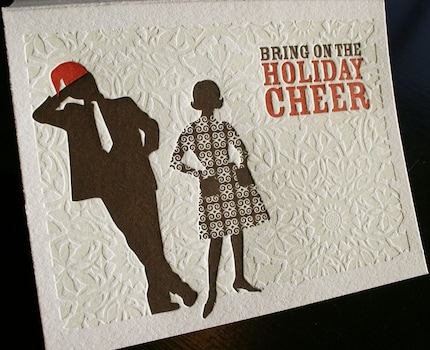

If you're looking for some holiday greeting cards, check out some of the many, many handmade creations on Etsy. Handsome stuff.
Happy holidays!
Friday, November 28, 2008
Talking Times Ten.
 Here's a nice thought from World Hunger Year, who credits Brian Halweil, reasearcher at the Worldwatch Institute, with the observation that people are ten times more likely to have a conversation at the farmers' market than at the supermarket -- an upbeat, pithy thought that entreats rumination about conversation generally, about sociability and consumer comfort, and all kinds if interesting things, I think.
Here's an excerpt from WHY's pitch for farmers' markets:
"People come to farmers' markets for many reasons -- for the joy of eating seasonally; for the nutritious vegetables they can't find anywhere else; for the beauty and smells of the bounty of herbs and produce.
Farmers' markets are good for consumers, farmers, and for the community. By keeping local farms viable, markets sustain regional open space. Markets in town and city centers create new gathering places to bring customers downtown, where they shop at local businesses as well as at the market. Author Brian Halweil says that shoppers are 10 times more likely to have a conversation at a farmers' market than at a supermarket. Furthermore, buying from local producers and businesses keeps dollars re-circulating throughout the region, which is good for the community's economic health. Farmers' markets can also provide extra income for community gardeners and employment for local youth.
Farmers' markets can be a way to preserve and create a market for culturally traditional foods and crops. Farmers can respond directly to their shoppers' wants, and are able to provide the community with culturally appropriate foods that may not be available anywhere else. This is a particularly important benefit for many new farmers' markets being established on Native American reservations. In these communities, the process to develop a new market includes discussion of the preservation of cultural identity and the viability of the traditional land-based society."
Monday, November 24, 2008
Moms Rising.
 This looks like it could be a valuable resource for lots of people I know.
"A cyber-savvy bootstrap organization called MomsRising.org is . . . [r]ecruiting thousands of mothers (and anyone who has a mother) to join via its website, MomsRising.org may have found the formula to engage, educate, and amplify the voices of America’s millions of mothers."
Wednesday, November 12, 2008
61 trees and tree pie.

Here's something to reflect on. A thought like this can bring the global/local ideas into sharp focus.
There are 61 trees per person on planet Earth, NPR reports today.
We use trees for: "baseball bats, barrels, books, blocks, benches, crutches, coffee filters, guitars, grocery bags, pencils, pine oil, beds, billboards, buttons, candy wrappers, buttons, chewing gum, cork, crayons, egg cartons, fruit pie filling, kites, linoleum, luggage, paper, pingpong balls, chopsticks (especially the disposable kind), rubber, tambourines, telephone books, tires, toilet paper, turpentine, xylophones and yo-yos (the wooden kind)."
Did you see "fruit pie filling" on that list? Weird. Think I'll pass on the Balsam Fir pie this Thanksgiving.
Monday, November 10, 2008
Columbus, Ohio: best place to raise kids
 Businessweek Magazine just named Columbus, Ohio one of the top places in the country to raise children. With resources like the Columbus Zoo, COSI, the Wexner Center, and the Columbus Museum of Art, along with those fantastic crafty kids' stores opening up along High Street, I have to agree.
Tuesday, November 4, 2008
Fireworks and car horns.
Washington is filled with home-spun fireworks launched from roofdecks and  celebratory honkings of car horns.
I voted at the Dr. Martin Luther King, Jr. library this morning in Washington, D.C. for the first African-American President of the United States of America.
Progress doesn't come quickly, but it comes.

 celebratory honkings of car horns.
I voted at the Dr. Martin Luther King, Jr. library this morning in Washington, D.C. for the first African-American President of the United States of America.
Progress doesn't come quickly, but it comes.

Monday, November 3, 2008
Election Day in DC!
 So things are pretty looking good for our man Obama, and I'm excited for Election Day tomorrow. It's pretty chill here in DC, from my vantage point at least, because campaigns are everywhere but here, working the crap out of those swing states. Funny that I come to DC and hear about my friends seeing Obama and McCain campaigning in Ohio. My bandmate and good friend Billy and our friend Jill have been canvassing their tails off in Columbus, Ohio neighborhoods, trying to get less-likely voters to the polls. Way to go!
I plan on watching the returns with some friends from school here in DC, along with the rest of the city. The Hawk 'n' Dove worked well for the debate-watching.
Happy voting -- GObama!
Sunday, October 19, 2008
A Green New Deal? & A New Book Out
 Here's a nice, short article that puts the $700 billion economic stimulus package in perspective, in light of our pressing environmental and energy concerns. It highlights a concern that I share about the long-term viablility of this short-term solution to the economic crisis, calling for something akin to what commentators have called a Green New Deal to make real change on that front.
The article refers to a brand-new book from Van Jones that looks timely and insightful.
Thanks to Good Magazine.
Friday, October 17, 2008
Still using plastic bags?
 My good friend Billy loves tote bags and exfoliating. Here's a nice looking tote that comes in two sizes, available at Whole Foods for just 79 to 99 cents. The toddlerish quote, complete with funky ellipses ("I love my home... planet Earth") is from Sheryl Crow.
Sometimes it can be difficult to use reusable bags at every trip to the store -- they're not always in the car, after all, and we don't exactly plan every trip to pick up essentials. I suggest forcing yourself to buy a bag or two every time you walk through those glass door and realize you've forgotten your lovely reusable bags at home. Of course, it'd be just as bad to have a million or so of these handsome sacks junking up our landfills, but doing this once or twice could remind you to keep your bags in the car (or near your bike!).
If you'd like to shift your consumer votes away from big oil (yes, they make those plastic bags, too!) and toward your community, pick out one of these gorgeous totes on Etsy, and be proud of your commitment to the planet, to local commerce, and to the arts all at once.
Extra credit: Your proud bag transition can serve as an example for yourself: what other decisions can you make to divert your dollars from big, heavy, dirty industry, to nimble, clean, local purveyors?
This year, China banned the use of plastic shopping bags nationwide, and San Francisco also became the first U.S. city to ban the use of these wispy disposables. If China and San Francisco can agree on something, surely we can abide within our own households, eh? Here's an interesting summary from the AP concerning various public policies on plastic bags in the past several years:
Cities around the world are moving to ban plastic shopping bags to protect the environment. A roundup:
• In April 2007, Leaf Rapids, a town of about 550 people in Canada's Manitoba, became the first municipality in North America to adopt a law forbidding the use of plastic bags by shops. The law calls for fines of as much as 1,000 Canadian dollars, though no one has yet received one, a town official says. Local businesses offer reusable cloth bags as an alternative.
• In March 2007, San Francisco became the first city to ban common plastic shopping bags. At least 30 villages and towns in Alaska have followed suit.
• In January, the New York City Council voted to require large stores and retail chains to recycle plastic bags.
• The following U.S. cities are considering fees or bans of plastic bags: Austin, Texas; Bakersfield, Calif.; Boston; New Haven, Conn.; Portland, Ore.; Phoenix; and Annapolis, Md.
• In Germany, stores provide consumers with the option of a plastic bag or a canvas- or cotton-made tote — for a fee. Many German consumers carry their own bags when doing the shopping and it's not uncommon to see some using wicker baskets or wheeled carts. Stores that offer plastic bags have to pay a recycling fee.
• In January, China announced a ban on stores handing out free plastic shopping bags. The ban takes effect June 1, two months before Beijing hosts the Summer Olympics. The measure will eliminate the flimsiest plastic bags and force stores to offer more durable bags.
• Kenya, Uganda and Tanzania's Zanzibar islands have banned flimsy plastic, introducing minimum thickness requirements. Many independent supermarkets in Kenya's capital, Nairobi, now charge a small fee for each plastic bag but also give away a free, reusable basket with a minimum purchase.
• In 2003, Ireland introduced a 22-cent levy on every plastic shopping bag. That, the government said, resulted in a big drop in the number of bags that stores were handing out. Some switched to paper bags; others stopped handing out bags completely. In July 2007, Ireland raised the fee to 32 cents.
• Shopkeepers in the English town of Modbury, which has about 1,500 residents, eliminated disposable plastic bags, while some of the country's big grocery chains have offered customers money-saving incentives to reuse old bags.
• The Swedish government is encouraging plastic bag producers to continually develop greener bags. Two of the Nordic country's biggest grocery chains have made biodegradable paper bags and reusable cloth bags available to shoppers.
From the Associated Press
Thanks to AlternativeConsumer.com.
Sunday, October 12, 2008
So many good people are from Ohio.

When I arrived in DC for law school I met a ton of people -- I must have added a hundred new Facebook friends (the most objective modern-day gauge of social activity, of course) since July. My classmates here at GW Law are friendly, very smart, well-rounded people with balanced lives and nuanced perspectives that I'm eager to experience every day. All of these new faces gave me the opportunity to explain who and am and where I'm from more than a few times. When I told people I'm from Ohio, it was hard not to notice how many of these folks said things like, "I know a lot of really good people from Ohio," or "I never met anyone from Ohio I didn't like." Here are the things that went through my head after hearing this kind of thing over and over:
Step 1: Midwestern pride
Midwesterners are known for their niceness and down-to-earth attitudes; both are quite likeable. No surprise here.
Step 2: Ohio pride as a specific Midwestern pride
Far from the vanilla flatland it's described as by less articulate left- and right-coasters, Ohio is a land of political swingery and complex urban-rural dynamics. It is the home of telecommunications executives and soybean farmers, wealthy Lake Erie boaters and landlocked hill-dwellers, consumer test markets and local farmers' markets. Its complexities represent the whole of the United States, which is why everyone from corporate marketeers to national political party chairs are keenly interested in the Buckeye State. Risking too-proud over-generalization, I think it makes sense that people who grow up amidst these differing dynamics have a flatfooted appeal that makes them likable to other Americans from all points non-Ohio.
Step 3: The dread
After the Ohio solidarity wore off, perhaps three days later -- any quicker, after all, would be sooner than the half-life of Buckeye pride would allow to dissipate into the 20001 ZIP code -- it occurred to me that there must be a lot of Ohioans out there to be giving all these non-Ohioans such frequent and favorable impressions. And then -- oh no -- of course there are: Ohio leeches fertilizer into its groundwater, and it leeches talent to Chicago, New York, and Washington. You can't turn a corner in Chicago without bumping scarves with someone from Lima or Canfield. Ohio nurtures well-balanced young adults with high hopes and honest eyes, and after they peak in Columbus or Cleveland they head to bigger ponds because they think that's the only place they can grow.
Step 4: A solution
I think that because Ohio is a microcosm of America, because it's a victim of post-industrial rust and because it is ripe for enviro-industrial seed-sowing, it's a place worth growing into, not growing out of. If the talent stays, if progressive hearts and ambitious minds resist retreat to bigger cities, Ohio can be an experiment in the new kind of progress required by the twenty-first century challenges of post-meltdown economic restructuring, of now-imperative green industrialization, and of red-versus-blue social issues concerning reproductive rights, gun control, and race relations.
I'll be thinking about how this experiment will go.
Subscribe to:
Posts (Atom)

